Smart Website Design for Contractors Who Want More Leads
You know the feeling. You finish a job, clean up the truck, and head home. The work is solid. The client is happy. But tomorrow morning the phone might ring or it might not. That uncertainty is the part of contracting nobody warns you about. A lot of contractors I have talked to around the Chicago suburbs tell me the same story: they rely on word of mouth, maybe a sign in a yard, and a few repeat customers. That works for a while. But it leaves you exposed when the economy shifts or a competitor starts showing up on every search result.
Having a professional online presence changes that. It turns your business into something people can find at ten o'clock at night when their basement sump pump fails. It gives them a reason to call you instead of the next name on the list. And that starts with smart website design for contractors. Not a generic template with stock photos of people in hard hats. A site that actually reflects how you work, what you charge, and why someone should trust you with their home or business.
I have seen contractors spend good money on ads and still get no calls. The problem is not the ad. It is what happens after someone clicks. If the page loads slow, looks dated, or buries the phone number, that visitor leaves. A solid website design for contractors solves that by putting the most important information right in front of the visitor. Your service area, your license number, a clear call to action, and proof that you have done this before. That is the foundation.
What Makes a Contractor Website Different
A restaurant website needs a menu and hours. A law firm site needs credibility and a blog. A contractor site needs to answer one question fast: can this person fix my problem and will they show up? The answer comes from a few specific elements. First, a portfolio of real projects. Not just the finished photo but a short description of the challenge and how you solved it. Second, testimonials that mention specific results, like finishing ahead of schedule or staying under budget. Third, a clear explanation of your service area and the types of work you handle. If you only do residential electrical work in the northwest suburbs, say that. It saves you time and builds trust.
Another thing that matters more than most contractors realize is mobile performance. A huge percentage of homeowners search for contractors on their phones while standing in a flooded laundry room or staring at a broken furnace. If your site takes more than three seconds to load, they are gone. Image optimization, clean code, and a responsive layout are not optional. They are table stakes. Good website design for contractors accounts for this by prioritizing speed and usability over fancy effects.
Local SEO and the Connection to Your Website
You can have the best looking site on the internet and still get no traffic if nobody can find it. That is where local search optimization comes in. Your website needs to signal to Google that you serve a specific area. That means having your city and state in the page titles, headers, and body text. It means having a Google Business Profile that matches the information on your site. It means getting reviews from real clients and responding to them.

I have worked with a roofer in Arlington Heights who was spending two thousand dollars a month on pay-per-click ads. His site was beautiful but it had no local content. We added a page for each town he served, wrote a short description of common roofing problems in that area, and linked to his portfolio. Within three months his organic traffic doubled and his ad spend dropped by half. That is the power of combining a strong website with local SEO strategy.
Content That Works for Contractors
Writing for a contractor website is different from writing for a blog about home improvement. Your audience is not browsing for inspiration. They have a problem and they need a solution now. So the content should be direct and helpful. A page titled "How to Tell if Your Roof Needs Repair" is more useful than "Our Roofing Services". It answers a question the homeowner already has and positions you as the expert.
You can use short articles on specific topics like permits, material choices, or seasonal maintenance tips. Each piece should include a clear next step, usually a phone number or a contact form. Keep the language simple. Avoid jargon unless you explain it. And always include a photo of a real job you completed, with a short caption. That combination of helpful content and real proof builds trust faster than any sales pitch.
Common Mistakes I See on Contractor Websites
Over the years I have reviewed dozens of contractor sites and the same problems keep coming up. Here are the most common ones:
- Hiding the phone number. It should be in the top right corner of every page, not just the contact page.
- Using generic stock photos. Homeowners can tell when a photo is not from a real job. It hurts credibility.
- No clear call to action. Every page should tell the visitor what to do next. Call now, get a free estimate, schedule a consultation.
- Slow load times. Large image files, unoptimized code, and too many plugins kill mobile performance.
- Outdated design. A site that looks like it was built in 2010 signals that the business might not be current either.
Fixing these issues does not require a complete redesign in every case. Sometimes it is as simple as moving the phone number, compressing images, and rewriting a few headlines. But the impact on conversion rates can be dramatic.
Balancing Cost and Quality
Every contractor I talk to asks the same question: how much should I spend on a website? The honest answer is that you can get a functional site for a few hundred dollars or invest several thousand. The difference is in the strategy behind it. A cheap template site with no optimization might get you by for a while, but it will not grow your business. A custom site built with local SEO, fast hosting, and a clear content plan will pay for itself many times over in new leads.
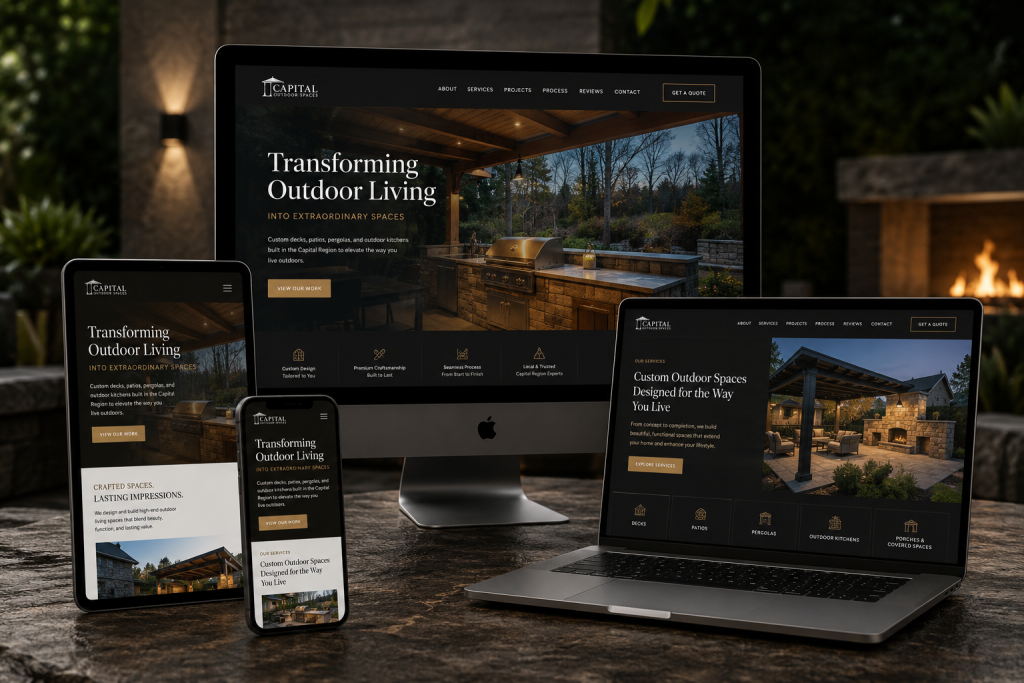
I recommend starting with a clear list of what you need. A contact form that works. A portfolio with real photos. A service area page. A mobile-friendly design. A way to track calls and form submissions so you know what is working. That last piece is often overlooked. If you do not measure where your leads come from, you are flying blind. A good web designer will set up analytics and show you how to read the data.
At the end of the day, your website is a tool. It does not replace the quality of your work or your reputation. But it does control who gets the chance to hire you. A well-built site makes sure that when someone searches for a contractor in your area, they find you first. And when they land on your site, they see exactly why they should pick up the phone.
Lemur Marketing, based at 1574 Henry Ave, Des Plaines, IL 60016, USA, offers web design, local SEO, and paid advertising services tailored to contractors and local businesses in the Chicagoland area. Reach them at +1 630-551-8493 to discuss how a focused digital strategy can help your contracting business grow.
Connect with us on LinkedIn.